Entry management is moving beyond metal keys, plastic badges, and isolated security desks. Artificial intelligence can connect cameras, access credentials, visitor records, and building sensors within one coordinated system. This change explains why the Future Of Ai In Entry Management matters to offices, hospitals, campuses, and industrial facilities. A trained system may recognize unusual entry patterns, flag repeated access attempts, and alert staff before a small anomaly becomes a serious operational problem. It can also reduce queues during busy morning arrivals. That is practical value.
Cybersecurity expert Bruce Schneier offers a principle that remains highly relevant: “Security is a process, not a product.” His statement reminds organizations that intelligent entry tools require continuous testing, monitoring, and improvement. AI can support faster decisions, but it should not replace accountable professionals. A facial or behavioral model may perform well in controlled conditions, yet produce errors under poor lighting, changing appearances, or unfamiliar visitor behavior. No system is flawless.
The strongest Future Of Ai In Entry Management strategies combine automation with human judgment, clear data controls, and reliable audit trails. Managers need to know why an alert appeared, who reviewed it, and how the system handled uncertainty. They must also protect personal information and provide accessible alternatives when automated identification fails. That detail matters. A smoother entrance is not automatically a safer entrance. Real progress depends on measured accuracy, responsible deployment, and honest evaluation after installation. AI may become the quiet engine behind secure access, but trust will determine whether people accept it.
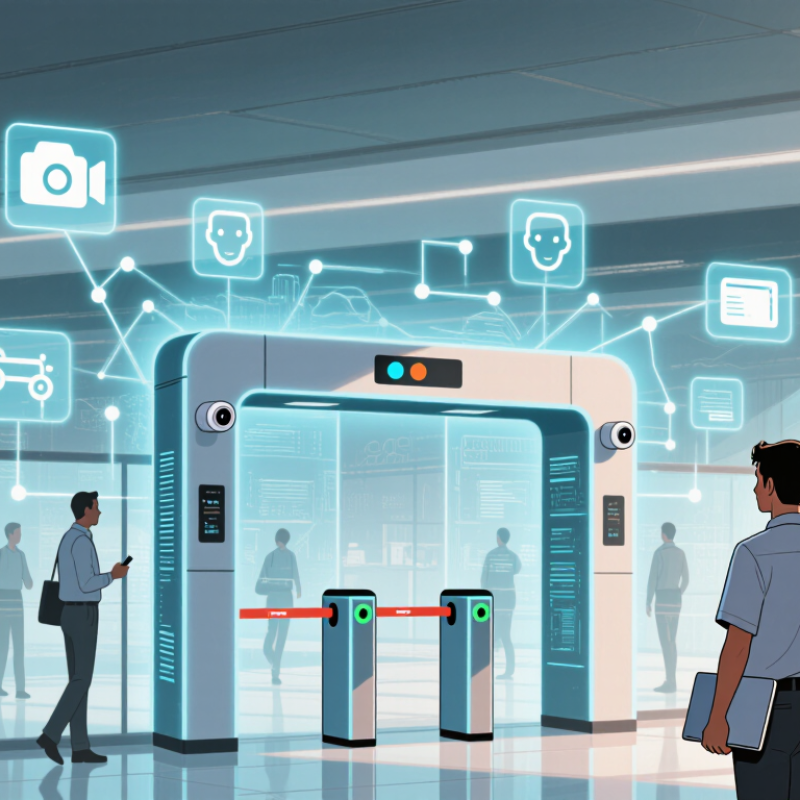
Why Is AI the Future of Entry Management?
What AI-Powered Entry Management Means
AI-powered entry management connects cameras, access readers, visitor records, and occupancy data in one responsive system. It can recognize unusual movement, verify access patterns, and alert staff before a minor concern becomes a serious disruption. The 2024 Data Breach Investigations Report found that the human element appeared in 68% of breaches. Better entry controls can reduce avoidable mistakes, especially when employees share credentials or forget to report lost passes.
The technology is practical at the doorway. A visitor arrives at 9:12 a.m., presents a temporary credential, and enters only the approved floor. AI checks the time, location, and access history in seconds. It can flag repeated attempts or an unexpected entry route. A 2024 global data breach study placed the average breach cost at 4.88 million dollars, showing why prevention deserves investment. Physical access is not separate from digital security anymore.
But AI is not infallible. Lighting, camera angles, accessibility needs, and unusual work schedules can produce false alerts. Human review still matters. Organizations should test accuracy, limit data collection, document decisions, and provide a clear appeal process. The NIST AI Risk Management Framework recommends continuous monitoring and defined accountability, not blind automation. That approach feels less impressive, perhaps, but it is more trustworthy. Entry management should make buildings safer without making ordinary people feel constantly watched.
AI adoption is significantly higher among larger organizations, showing the growing readiness for intelligent, automated entry management.
In 2023, 30.4% of large enterprises in the European Union used at least one artificial intelligence technology, compared with 13.0% of medium-sized enterprises and 6.4% of small enterprises. This growing adoption supports the use of AI for identity verification, anomaly detection, visitor screening, and more efficient access decisions.
Source: Eurostat, “Use of artificial intelligence in enterprises,” 2023.
Why Is AI the Future of Entry Management?
AI is changing entry management from a one-time check into continuous identity verification. It can read identity documents, compare facial features, and detect signs of presentation attacks within seconds. Risk-based models also study location, device health, login time, and unusual behavior before granting access. This creates a clearer picture than passwords or access cards alone.
The 2024 Data Breach Investigations Report found that 68% of breaches involved a human element. Stronger verification can reduce mistakes, especially at busy doors where staff may miss small inconsistencies. The 2024 Cost of a Data Breach Report placed the average breach cost at 4.88 million dollars. That figure makes identity controls a business priority, not merely a security upgrade. Yet AI is not flawless. Poor lighting, aging data, biased training sets, or network delays can cause valid users to fail verification. Human review still matters.
Tips: Use layered verification instead of one biometric signal. Test systems with different lighting, ages, skin tones, and accessibility needs. Keep audit logs, explain access decisions, and review false rejections monthly. Do not collect more identity data than necessary. A faster gate is useful. A fairer gate is essential.
Intelligent entry systems combine several technologies to make access faster and more reliable. Cameras can support facial matching, while liveness detection helps identify real people. Sensors can monitor doors, movement, and unusual access patterns. These tools work together instead of depending on one signal.
Machine learning improves as systems process approved entry events and detect repeated patterns. Edge computing can analyze data near the entrance, reducing delays during busy periods. Encrypted communication protects credentials while audit logs support clear reviews.
Mobile credentials and touchless readers also improve convenience for offices, campuses, and secure facilities. However, no model is flawless. Poor lighting, camera angles, or outdated records can still cause mistakes. Human review remains important when technology is uncertain.
Tips: Test readers in rain, darkness, and crowded conditions. Set clear permission levels before deployment. Review access logs regularly, and remove inactive credentials quickly. Keep a manual process available for emergencies. Small details matter, such as a reader placed too high or a door that closes too slowly. Teams should measure false rejections, not only successful entries. Privacy settings also need regular attention, because collecting more data does not automatically create better security.
AI is reshaping entry management because it turns scattered signals into practical decisions. A camera, badge reader, and visitor system can work together within seconds. AI can recognize unusual movement, detect repeated access attempts, and alert staff before a small issue becomes disruptive. According to McKinsey’s 2024 State of AI report, 72% of surveyed organizations use AI in at least one business function. That adoption reflects growing confidence in automated analysis, not blind trust.
The benefits are visible at the entrance. AI can shorten queues by verifying credentials quickly and guiding visitors through digital check-in. It can also support security teams by prioritizing alerts instead of forcing them to watch every screen. IDC forecasts worldwide AI spending will reach 632 billion dollars by 2028, up from 235 billion dollars in 2024. This investment suggests that organizations expect measurable gains in efficiency, responsiveness, and operational visibility.
Still, AI is not automatically accurate. A poorly trained system may flag normal behavior or reject a legitimate visitor. That creates frustration at a reception desk. Human review remains necessary, especially when lighting, language, or visitor patterns change. Reliable entry management should record decisions, test performance regularly, and limit data collection to a clear operational purpose. The technology can help, but experience still matters.
AI is reshaping entry management because it can assess identity, behavior, and context within seconds. A camera sees a face; a secure system also checks access time, location, device health, and permission scope. That distinction matters when a valid credential appears at an unusual door. The 2024 Data Breach Investigations Report found that human involvement appeared in 68% of breaches. Better detection can reduce routine mistakes, but it cannot replace trained security staff.
Privacy must be designed into the entrance, not added after installation. Systems should collect only necessary data, encrypt templates, restrict administrator access, and set short retention periods. Clear notices matter when visitors do not expect biometric checks. The 2024 Cost of a Data Breach Report estimated the average global breach cost at $4.88 million. One exposed database can turn convenience into a lasting liability. Data quality is another concern. Facial recognition may perform unevenly across lighting, camera angles, and demographic groups. Models still fail.
Implementation should begin with a narrow pilot, measurable thresholds, and a manual fallback. Test false accepts, false rejects, queue times, and accessibility impacts before expanding. The NIST AI Risk Management Framework recommends governance, measurement, and ongoing monitoring throughout an AI system’s lifecycle. In practice, this means logging decisions without storing unnecessary images. It also means reviewing alerts with people, rather than blindly following scores. Test before scaling. Deployment reviews often show teams measure speed first and privacy later. That order is difficult to repair. Security improves when operators, suppliers, and data owners share responsibility.
It connects cameras, access readers, visitor records, and occupancy data.
It may flag repeated attempts, unexpected doors, or unusual access times.
Human involvement appeared in 68% of reported data breaches.
No. Staff should review alerts and question doubtful results.
Collect only necessary information and encrypt stored templates.
Excessive monitoring may make ordinary visitors feel constantly watched.
Start with a narrow pilot at one entrance or floor.
A manual fallback should let trained staff verify entry safely.
AI-powered entry management is reshaping how organizations identify people, verify access, and protect physical spaces. By combining computer vision, biometric analysis, machine learning, and connected sensors, intelligent systems can evaluate credentials more quickly and accurately than traditional methods. They can recognize authorized individuals, detect unusual behavior, adapt to changing conditions, and support smooth entry while reducing manual workload. This makes access control more efficient, responsive, and easier to manage across offices, facilities, campuses, and other approved environments.
The Future Of Ai In Entry Management depends not only on advanced technology but also on responsible implementation. Organizations should use secure data practices, clear consent procedures, limited data collection, and transparent policies to protect privacy. Regular system testing, human oversight, accurate identity verification, and reliable backup procedures are also essential. When security, convenience, fairness, and accountability are considered together, AI can create entry systems that are safer, more adaptable, and better prepared for evolving operational needs.

YVC Home