Why Choose Eco Friendly Door Manufacturing?

Time:2026-09-20 Author:Liam
0%

Choosing an eco-friendly door manufacturer is no longer only an environmental decision. It affects indoor air quality, energy performance, material safety, and long-term building value. In the Eco-Friendly Manufacturing In Door Industry, responsible producers examine every stage, from timber selection to packaging and installation. They may use certified wood, recycled steel, water-based finishes, and low-emission adhesives. These choices can reduce waste without weakening durability.

Details matter. A well-made door should close evenly, resist moisture, and maintain stable performance through changing seasons. Manufacturers with practical experience test hinges, seals, surface coatings, and insulation under realistic conditions. They also track material origins and communicate product limitations honestly. Independent certifications can provide useful evidence, but certification alone does not guarantee perfect sustainability. Supply chains change. Energy sources differ. Some “green” claims remain too vague.

That is worth questioning.

For buyers, the best decision combines verified documentation with careful product comparison. Look for recycled content, responsible forestry evidence, low-VOC finishes, repair options, and transparent waste policies. Ask how defective units are handled. Ask whether replacement parts remain available after installation. These questions reveal more than attractive packaging.

Eco-friendly manufacturing can also support healthier workplaces and more efficient resource use. However, every material has a footprint, including recycled materials and shipping. A reliable manufacturer acknowledges these trade-offs instead of promising a flawless solution. Choosing carefully may cost slightly more at purchase, yet durable construction can reduce maintenance, replacement, and disposal over time. The goal is not perfection. It is measurable improvement, supported by evidence and responsible craftsmanship.

Why Choose Eco Friendly Door Manufacturing?

What Eco-Friendly Door Manufacturing Means

Why Choose Eco-Friendly Door Manufacturing?

Eco-friendly door manufacturing means measuring impacts before, during, and after production. It is not simply using a green label. Manufacturers examine timber sources, recycled content, adhesives, energy use, packaging, and end-of-life recovery.

The United Nations Environment Programme reported that buildings consumed 34% of global energy and produced 37% of energy and process-related emissions in 2022. Doors represent only one building component, but their materials and replacement cycles still matter.

A responsible factory may use certified wood, recycled steel, low-emission coatings, and water-based adhesives. It can also optimize cutting patterns, reuse clean offcuts, and separate waste for recovery.

The U.S. Environmental Protection Agency estimated that construction and demolition materials generated about 600 million tons of debris in 2018. Better door manufacturing can reduce this burden through durable designs and repairable components.

Small details matter. A replaceable seal can prevent a full door replacement.

Performance must be tested, not assumed. A well-sealed door can reduce drafts, moisture entry, and heating or cooling losses. However, recycled content alone does not prove sustainability.

Transport distance, coating durability, maintenance needs, and actual service life may change the result. This is where manufacturers need transparent environmental data and third-party testing.

The process is imperfect. Data gaps remain, and some “eco-friendly” choices may create trade-offs. Honest reporting is more useful than impressive claims.

Sustainable Materials Used in Door Production

Why Choose Eco Friendly Door Manufacturing?

Sustainable door production begins with material selection, not attractive packaging. Timber from verified responsible sources can reduce reliance on virgin resources. Recycled steel and aluminum also limit the need for energy-intensive primary extraction. However, recycled content must be documented. Otherwise, it is only a hopeful claim.

The UNEP and GlobalABC 2023 Global Status Report states that buildings consumed 34% of global energy in 2022. They also produced 37% of energy and process-related carbon emissions. Doors are small components, but thousands of doors influence a building’s footprint. Manufacturers should therefore assess timber, cores, coatings, sealants, and hardware together. Low-emission adhesives matter in enclosed rooms. Durable finishes matter even more when they prevent early replacement.

The U.S. Environmental Protection Agency reported about 600 million tons of construction and demolition debris in 2018. Around 145 million tons reached landfills. Door factories can respond by using recycled fibers, recoverable metal parts, and modular components. A practical production check includes moisture resistance, repairability, and end-of-life separation. Green claims remain weak without lifecycle evidence or environmental product declarations.

The honest limitation is simple. No material is automatically sustainable. A poorly made “eco” door may warp, leak, or require replacement within years. That waste can cancel its environmental advantage. Better decisions combine verified sourcing, measured durability, efficient manufacturing, and transparent reporting.

How Eco-Friendly Doors Are Manufactured

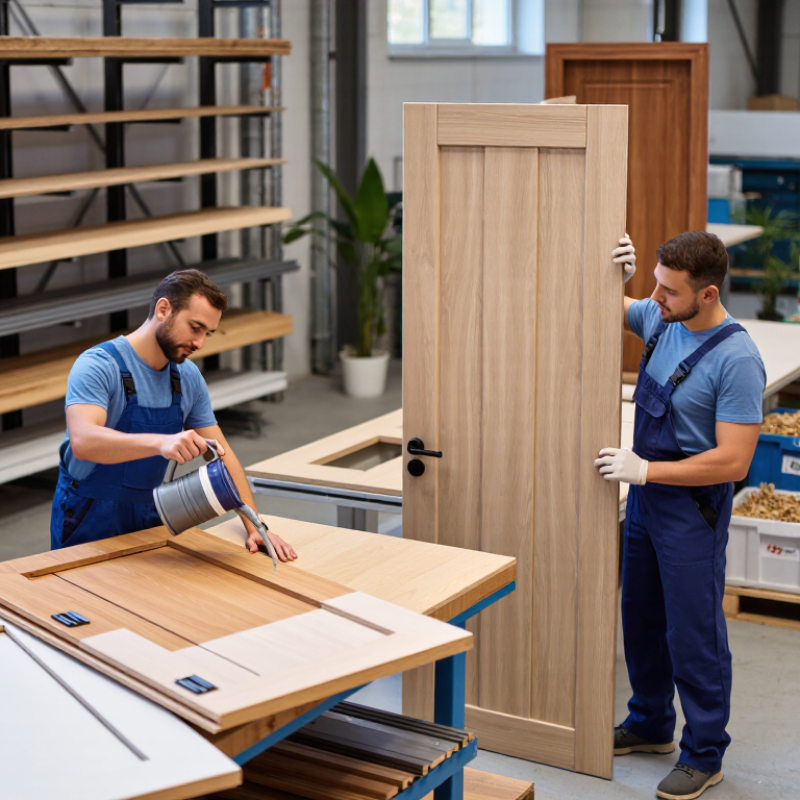
Eco-friendly door manufacturing begins with careful material selection. Responsible factories may use timber from verified sources, recycled metal, or rapidly renewable fibers. Each material is checked for moisture, strength, and contamination before production. This prevents early warping and unnecessary waste.

Small details matter. Wood is cut with computer-guided equipment to improve accuracy and reduce offcuts. Some factories turn clean scraps into interior cores or packaging parts. Low-emission adhesives and water-based finishes help limit harmful vapors during production and installation. Workers also inspect door frames for gaps, uneven joints, and weak edges. These checks reflect practical experience, not just environmental claims.

The assembly stage combines precision with energy control. Efficient presses apply steady pressure, while temperature and humidity are monitored throughout curing. Doors may then undergo insulation, air-leakage, and water-resistance tests. Independent audits and documented material records can make these claims more reliable. Still, no process is perfectly green. Manufacturing uses energy, transport creates emissions, and recycled content is not always available in equal quality. A better factory measures these weaknesses instead of hiding them. That honesty supports improvements, such as renewable power, shorter delivery routes, and designs that can be repaired rather than discarded.

Environmental and Health Benefits of Sustainable Doors

Why Choose Eco Friendly Door Manufacturing?

Environmental and Health Benefits of Sustainable Doors

Eco-friendly door manufacturing can reduce material waste, emissions, and indoor pollution. The UNEP Global Status Report for Buildings and Construction reports that buildings create about 37% of global energy-related emissions. Door production is only one part of this impact, but better material choices still matter. Recycled timber, responsibly sourced wood, and durable steel can reduce pressure on raw resources. Longer service life also means fewer replacements and less waste in landfills.

Health benefits begin inside the room. The U.S. Environmental Protection Agency reports that indoor pollutant levels can be two to five times higher than outdoor levels, and sometimes much higher. Doors made with low-emitting coatings, adhesives, and sealants may release fewer volatile organic compounds. This can support cleaner air in bedrooms, schools, and offices. However, “natural” does not always mean safe. Some wood treatments and adhesives still require careful testing.

Tips: Ask for emissions testing, recycled-content information, and a product life-cycle assessment. Check whether the door has a clear material declaration. Confirm that the frame, finish, and core meet the same health expectations. A durable door may cost more initially, yet replacement waste can be expensive. The evidence is helpful, but it is not perfect; manufacturers should disclose uncertainties instead of hiding them.

Key Factors for Choosing an Eco-Friendly Door Manufacturer

Why Choose Eco-Friendly Door Manufacturing?

Choosing an eco-friendly door manufacturer requires more than reading a green claim. Look for clear evidence about timber sources, recycled materials, finishes, and factory energy use. A reliable manufacturer should explain each material’s origin and provide current environmental documentation. Certifications can help, but they should match the product, not merely decorate a website. Ask how adhesives and coatings affect indoor air quality. Small details matter.

Visit the factory if possible. Observe covered timber storage, dust collection systems, and separate waste bins. Ask whether offcuts become new components or simply leave as waste. Experienced manufacturers can describe moisture testing, frame construction, and long-term maintenance without avoiding difficult questions. Request independent test results for insulation, durability, and fire performance where relevant. Performance should be measured, not promised.

Check delivery packaging and repair support too. A durable door may reduce replacement waste, even if its initial price is higher. However, “eco-friendly” does not mean impact-free. Recycled content may vary between batches, and transport can weaken environmental benefits. Manufacturers should admit these limitations and explain their improvement plans. That honesty builds trust. A written warranty, traceable records, and responsive technical advice also reveal professional reliability. I would be cautious when a supplier offers perfect figures without practical details. Manufacturing always involves trade-offs. Good decisions come from examining them closely.

Why Choose Eco-Friendly Door Manufacturing?

Key environmental indicators show why material efficiency, durability, energy performance, and responsible end-of-life planning should be considered when choosing an eco-friendly door manufacturer.

In the European Union, buildings account for approximately 40% of energy consumption and 36% of energy-related greenhouse-gas emissions. Construction and demolition activities generate at least 25% of total waste. These figures highlight the importance of doors with strong thermal performance, long service life, recycled or responsibly sourced materials, and designs that support repair and recycling.

Sources: European Commission, “Energy Performance of Buildings”; European Commission, “Construction and Demolition Waste.”

FAQS

Which materials are commonly used in eco-friendly doors?

Manufacturers may use verified timber, recycled metal, or rapidly renewable fibers. Each material is checked for moisture, strength, and contamination. Quality can vary.

How does production reduce material waste?

Computer-guided cutting improves accuracy and reduces wood offcuts. Clean scraps may become interior cores or packaging parts. Some waste still remains.

What finishes and adhesives support healthier indoor air?

Low-emission adhesives and water-based finishes can release fewer harmful vapors. They may suit bedrooms, schools, and offices. Testing still matters.

How are door frames checked during manufacturing?

Workers inspect frames for gaps, uneven joints, weak edges, and poor alignment. These small defects can cause drafts or early damage. Human inspection is not perfect.

What tests can sustainable doors undergo?

Doors may receive insulation, air-leakage, and water-resistance tests. Factories may also monitor temperature and humidity during curing. Results should be documented.

Can eco-friendly doors reduce environmental impact?

They can reduce waste, raw-material demand, and replacement frequency. Durable doors may stay useful longer. Manufacturing still consumes energy.

Are low-emission doors always completely safe?

No material should be accepted without evidence. Wood treatments, coatings, and adhesives can require separate emissions testing. “Natural” is not automatically harmless.

What information should buyers request?

Ask for emissions results, recycled-content details, and a life-cycle assessment. Check the frame, finish, and core separately. Clear declarations help.

Why might a sustainable door cost more initially?

Better materials, testing, and durable construction can increase the purchase price. Longer service may reduce replacement waste later. That outcome is not guaranteed.

How can manufacturers improve their environmental performance?

They can use renewable electricity, shorten delivery routes, and design repairable doors. They should disclose energy use and material limitations. Honesty is useful.

Conclusion

Eco-Friendly Manufacturing In Door Industry represents a responsible approach to producing doors that reduces environmental impact while maintaining quality, safety, and durability. It involves selecting sustainable materials such as responsibly sourced wood, recycled metals, low-emission composites, and non-toxic finishes. Manufacturers may also reduce waste, conserve energy and water, and improve production efficiency through thoughtful design and cleaner processes.

Eco-friendly doors can support healthier indoor environments by minimizing harmful emissions and improving insulation, which may reduce energy consumption over time. When choosing an eco-friendly door manufacturer, buyers should consider material transparency, certifications, responsible sourcing, production methods, product lifespan, recyclability, and after-sales support. A reliable manufacturer should clearly explain how its doors are made and demonstrate a genuine commitment to environmental responsibility rather than focusing only on marketing claims.

Liam

Liam

Liam is a dedicated marketing professional with a profound expertise in the industry, where he excels at highlighting the unique advantages of our core products. With a keen understanding of market trends and consumer needs, Liam frequently updates our company’s professional blog, providing......