Explore our premium grade custom entryways, performance acoustic barriers, and security doors engineered for modern architectural designs.
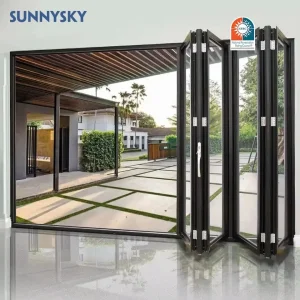
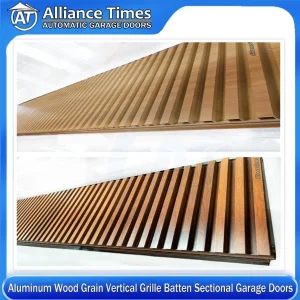
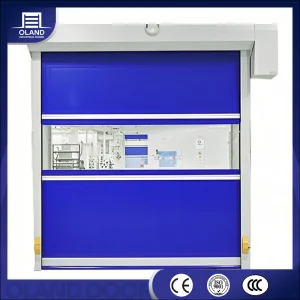
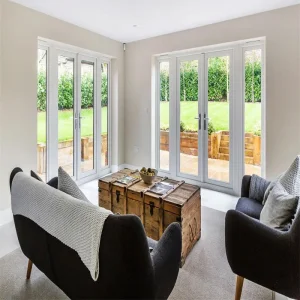
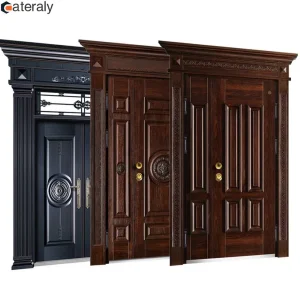
In the contemporary landscape of commercial spatial design, industrial manufacturing, and upscale residential developments, managing ambient noise has evolved from a secondary convenience to a critical regulatory and functional baseline. Sound transmission, particularly through moving structural elements like doors, presents a unique challenge to mechanical engineers and acoustic consultants. This is where specialized OEM/ODM Soundproof Doors Factories provide crucial intervention, developing advanced technological barriers that prevent unwanted decibel transfer while maintaining aesthetic and operational elegance.
Designing and manufacturing high-performance soundproof doors requires a fundamental understanding of acoustics. Sound travels via mechanical pressure waves through both air and structure. When these waves encounter a standard hollow-core or basic solid wood door, they easily vibrate the assembly, transforming the door itself into a secondary radiator of noise. To counteract this, custom soundproof door manufacturers utilize a process called **Constrained Layer Damping (CLD)**, integrating multi-density cores, specialized acoustic membranes, and airtight sealing systems to maximize the Sound Transmission Class (STC) and Weighted Sound Reduction Index (Rw) ratings.
A high-performance soundproof door is essentially an engineered sandwich of dissimilar materials. Standard acoustics dictate that homogeneous materials are prone to resonance frequencies. By combining materials of different densities and elasticities, a professional factory can disrupt the transmission of acoustic energy. Standard compositions engineered by top OEM suppliers typically include:
When global buyers seek OEM/ODM manufacturing partnerships, China's industrial infrastructure offers massive benefits that extend beyond mere cost efficiency. Chinese acoustic door factories combine raw materials access, specialized hardware ecosystems, and state-of-the-art testing laboratories to supply high-end, customized architectural solutions globally.
Modern Chinese factories utilize computerized numerical control (CNC) machining centers to ensure tolerances down to fractions of a millimeter. This extreme precision is essential for acoustic doors, where the integration of drop seals, flush bolts, and custom hinges must be absolute to prevent sound bypass.
Top-tier Chinese manufacturers operate in-house reverberation chamber test suites designed in accordance with ASTM E90 and ISO 10140 standards. This allows factories to perform rapid prototyping and verification of STC ratings during the R&D cycle, providing clients with certified testing reports.
From custom acoustic glass panels (clear laminated, double-glazed, or vacuum-insulated) to specialized fire-retardant paints and heavy-duty pivot hinges, Chinese factories have immediate localized access to all components, significantly shortening the production cycle.
Moreover, the scalability of Chinese factories enables them to handle diverse projects, from supplying hundreds of identical STC-rated doors for a luxury hotel development in Dubai to crafting a single, custom-engineered high-STC sound control door for an aerospace engine test facility in Germany. This flexibility in **OEM/ODM operations** makes China the primary hub for developers, general contractors, and acoustic consultants worldwide.
The global market for soundproof doors is experiencing a technology-driven evolution. The days of heavy, industrial-looking soundproof doors are gone. Modern engineering trends dictate that high-performance soundproofing must merge seamlessly with contemporary design. Key trends shaping the industry include:
Regulatory frameworks such as LEED (Leadership in Energy and Environmental Design) and BREEAM have forced factories to move away from urea-formaldehyde binders and traditional fiberglass fills. Leading OEM manufacturers now employ natural cork composites, recycled wood fibers, and bio-based binding agents that guarantee low VOC emissions while matching or exceeding traditional acoustic ratings.
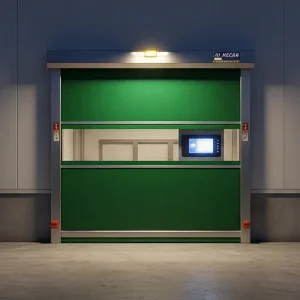
High-security areas, sterile pharmaceutical cleanrooms, and modern automated warehouses require hands-free operations. Soundproof doors are increasingly paired with intelligent electric drives, magnetic locks, and biometric sensors. Combining the mechanical pressure required for acoustic seal compression with automated opening operators represents one of the most complex engineering feats solved by premium ODM providers.

Depending on the sector, the performance profile and requirements of a soundproof door change drastically:
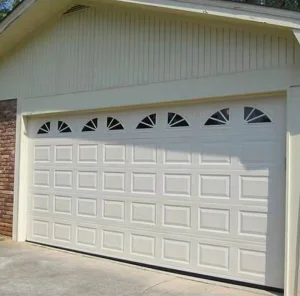
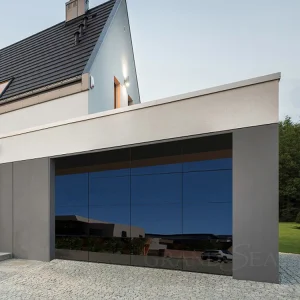
Beyond specialized acoustic interiors, building envelope integrity plays an equally critical role in noise mitigation and structural longevity. Each day, imagine entering your home through a beautiful, stylish, quality-built garage door. From the inside, whether doing weekend chores, a hobby project, or hosting an evening party that expands into your garage, a quality garage door elevates any home. Just as soundproof interior doors isolate noise within your rooms, high-performance exterior and garage doors insulate your entire structure from environmental noise pollution.
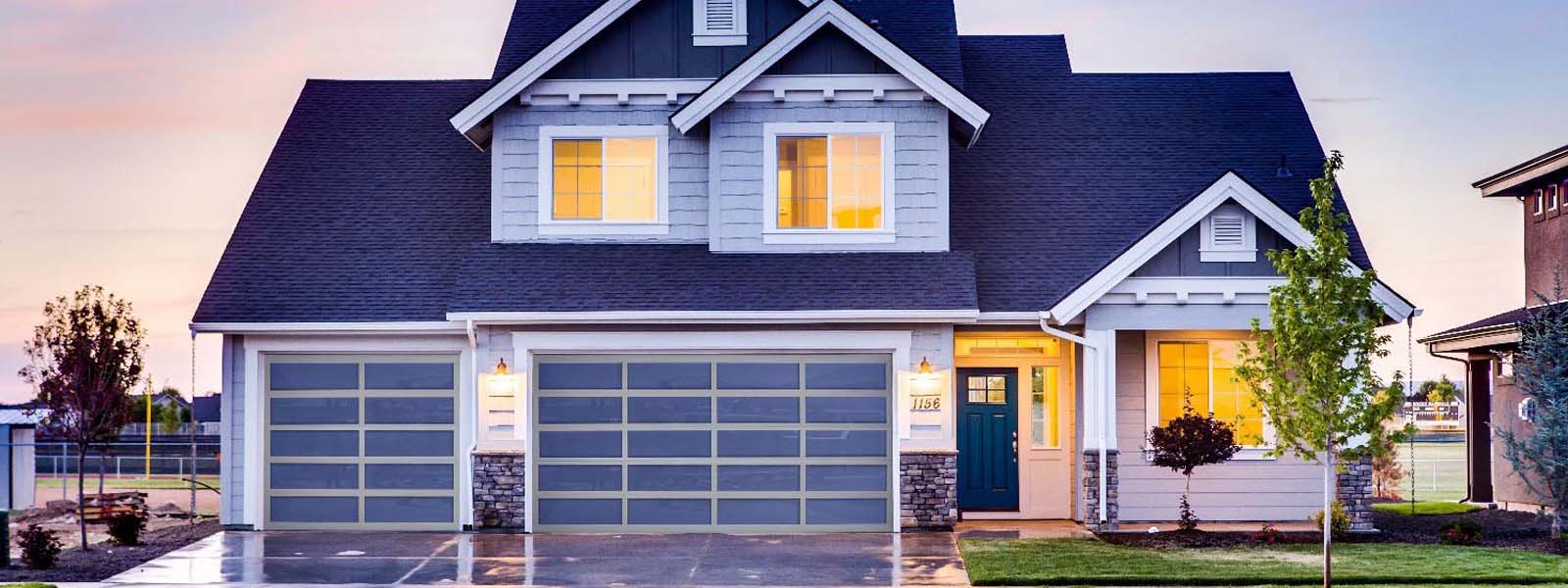
YVC Door garage doors are designed and manufactured for durability, quality, and style. The precision-cut tongue-in-groove frame construction, extra-wide top and bottom rails, heavy-duty exterior-grade vinyl weather seal, and wide end stiles ensure a weather-tight and sound-dampening fit for your garage door. For garages housing over-sized sedans and SUVs, the 6063-T6 extruded aluminum alloy integrated internal strut maximizes backroom and headroom clearance, minimizing mechanical rattling and structural vibration.
Our entire catalog of garage doors and acoustic barriers is fully customizable. We work directly with you, your dealer, or project architect to achieve the perfect functional and visual profile. Glass panels are available in white laminated, black laminated, clear laminated, and clear tempered forms—combining light transmission with enhanced acoustic barrier features. Aluminum alloy framing is available in clear, black, and dark bronze finishes, or you may specify a custom powder-coated finish to match your architectural requirements. Stock door sizes are available in 8, 9, 16, and 18-foot widths, and 7 and 8-foot heights. Custom widths and heights are available by special order.
For assistance with sizing, measuring, selecting options, or finding an authorized installer near you, please contact our technical support division. When you choose YVC Door, you're choosing quality, security, and unparalleled acoustic and structural style.
Get technical insights from our leading acoustic engineers regarding performance specifications, materials, and international standards.
STC (Sound Transmission Class) is the standard metric used primarily in North America, calculated over a frequency range of 125 Hz to 4000 Hz, targeting common speech and office noise frequencies. Rw (Weighted Sound Reduction Index) is the international standard (ISO) equivalent, calculated from 100 Hz to 3150 Hz. While similar, Rw can include correction factors (Ctr) to account for low-frequency noises like traffic or machinery, making it critical for industrial applications.
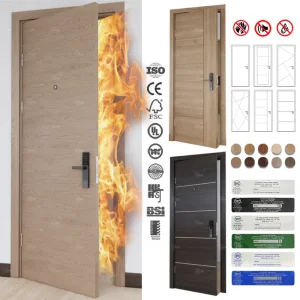
Yes, our custom OEM/ODM manufacturing processes allow for the integration of UL-certified fire cores (up to 90 or 120 minutes) alongside soundproof layers. This is achieved by utilizing non-combustible sound absorption materials such as mineral wool and specialized intumescent fire seals that expand during exposure to heat, providing an airtight seal while preventing fire and smoke spread.
High-performance soundproofing requires significant mass. A door rated STC 45 or higher can weigh between 70 to 120 kilograms. Traditional butt hinges will sag under this weight, resulting in misaligned perimeter seals and compromised acoustic performance. We construct our frames to support heavy-duty cam-lift or pivot hinges that lift slightly when opening and compress tightly upon closing.
Fluctuations in relative humidity and temperature can warp timber-based doors. Even a minor 2mm bend in the leaf breaks contact with the acoustic seals, neutralizing the door's sound insulation properties. For areas with high humidity or exterior exposure, our OEM services construct doors with internal aluminum stabilizing sheets, moisture-resistant MDF faceplates, and weather-proof vinyl coatings to ensure dimensional stability.
For global projects, compliance with ASTM E90 (for transmission loss testing) and ASTM E413 (for determining STC ratings) is widely recognized in North and South America. In Europe and Asia, BS EN ISO 10140-2 (measurement of airborne sound insulation) and BS EN ISO 717-1 are standard. When selecting an OEM factory, always request certified lab reports showing conformance to these methodologies.
Engineered for high-traffic facilities, cold rooms, cleanrooms, and premium residential spaces globally.
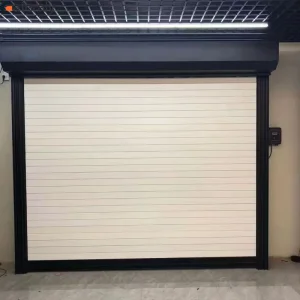

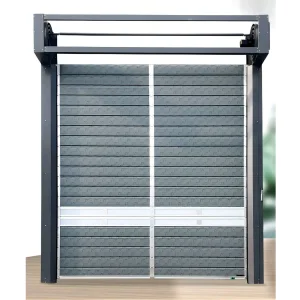
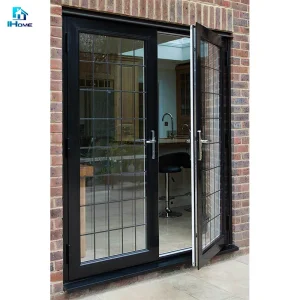
 YVC Home